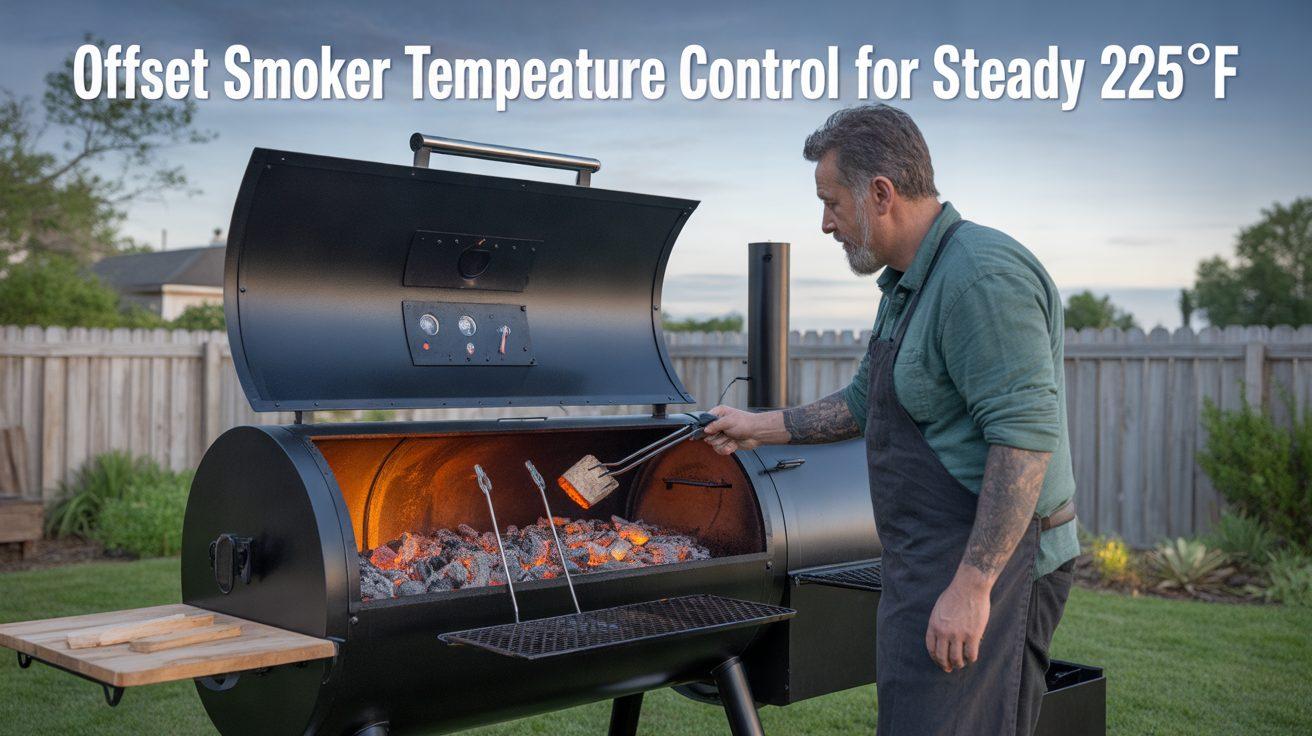
Reliable offset smoker temperature control at 225°F comes from treating the coal bed, preheated wood, and airflow as one fire system. Keep a clean draft, add small predictable splits before the bed weakens, and account for weather before the grate-level temperature drifts.
Table of contents
- What does a 225°F offset-smoker fire system actually require?
- How do you build a coal bed that holds 225°F predictably?
- Which wood split, preheating, and airflow choices give the best offset smoker temperature control?
- How should offset smoker temperature control change in wind, cold, rain, and direct sun?
- How do you diagnose offset smoker temperature swings without chasing the gauge?
- Frequently asked questions
What does a 225°F offset-smoker fire system actually require?
A reliable 225°F offset fire requires a clean-burning fuel bed, a consistent draft path from intake to stack, and enough thermal stability that each new split does not create a large heat spike. An offset smoker produces heat in a separate firebox, then draws heat and combustion gases through the cook chamber and out the exhaust stack. The stack draft is the pressure difference that pulls fresh air through the fire; it is created by the hot rising gases in the cooker.
These parts work together rather than independently. A strong coal bed helps a new split ignite cleanly, while an unobstructed draft supplies the oxygen that keeps that split burning instead of smoldering.
Coal bed means the established layer of glowing charcoal and fully burned wood embers that ignites the next fuel addition. It is not merely leftover ash. A healthy coal bed supplies even ignition energy, which lets a split catch quickly and burn with a bright flame instead of smoldering. Smoldering wood releases dense, dirty smoke and unstable heat because incomplete combustion is taking place.
Start with a chimney of fully lit charcoal in the firebox, establish a modest bed of glowing embers, and add one small dry split with the intake and exhaust open. Let the cooker rise toward the target before loading cold meat. Once the fire is burning cleanly, use the intake as the primary fine-control valve. Keep the exhaust mostly or fully open in normal operation so the cooker can maintain draft and move combustion byproducts away from the food.
Read temperature where the food cooks. A probe clipped at grate level near the main cooking zone is more useful than a lid-mounted dial, which can sit in a hotter or cooler layer of air. Use a second probe at the far end of the grate to learn your cooker’s temperature gradient. A difference from firebox side to stack side is normal; knowing its direction and size lets you place food intelligently rather than continually adjust a fire that is already functioning properly.
For regional barbecue guidance and live-fire cooking perspective, explore Big B’s Barbecue.
How do you build a coal bed that holds 225°F predictably?
Build a coal bed by lighting enough charcoal to create a continuous glowing base, then maintain it with fully combusted embers rather than repeatedly restarting small, weak fires. The first fire is often the least stable because cold steel absorbs heat rapidly. Give the cooker time to warm its metal, grates, and firebox before deciding that the fire is too weak.
At 225°F, the goal is not the smallest possible flame. The goal is a small, clean flame supported by a mature ember bed. A nearly extinguished fire may show a temporarily acceptable chamber reading, but it has little reserve. The next split will struggle to ignite, produce a cloud of stale smoke, then suddenly flare as airflow changes.
Use this operating sequence:
- Light a substantial starter bed. Wait until the starter charcoal is ash-covered and glowing, not partially black and smoking.
- Add one preheated split. Place the split on top of or beside the coal bed where flame can reach it. Avoid burying it in ash.
- Wait for clean combustion. The split should ignite with a visible flame. Thin, nearly invisible blue-tinted smoke or heat shimmer is preferable to billowing white or gray smoke.
- Settle toward 225°F. Begin reducing the intake in small steps as the cooker approaches the target, not after it has raced far beyond it.
- Feed before the bed collapses. Add the next split while there are still active coals and a small flame. A new split should extend the existing combustion cycle, not rescue a dying fire.
The sequence matters because each addition should continue an already healthy fire. If a split is being used to recover a nearly dead coal bed, the response will usually be slower and less predictable than a routine, earlier addition.
Ash management matters. A shallow ash layer insulates coals slightly, but a packed ash bed restricts oxygen from below and reduces firebox volume. If ash is obstructing the grate or covering the coals, carefully clear excess ash without scattering embers onto dry grass, decking, or combustible surfaces.
The most common advanced mistake is overcorrecting every five-minute change. Steel, food mass, and the fire all have lag. A vent change takes time to alter combustion; the resulting hot gases then take more time to affect the grate probe. Make one modest change, observe the fire and temperature trend, and let the system respond before making another correction.
Which wood split, preheating, and airflow choices give the best offset smoker temperature control?
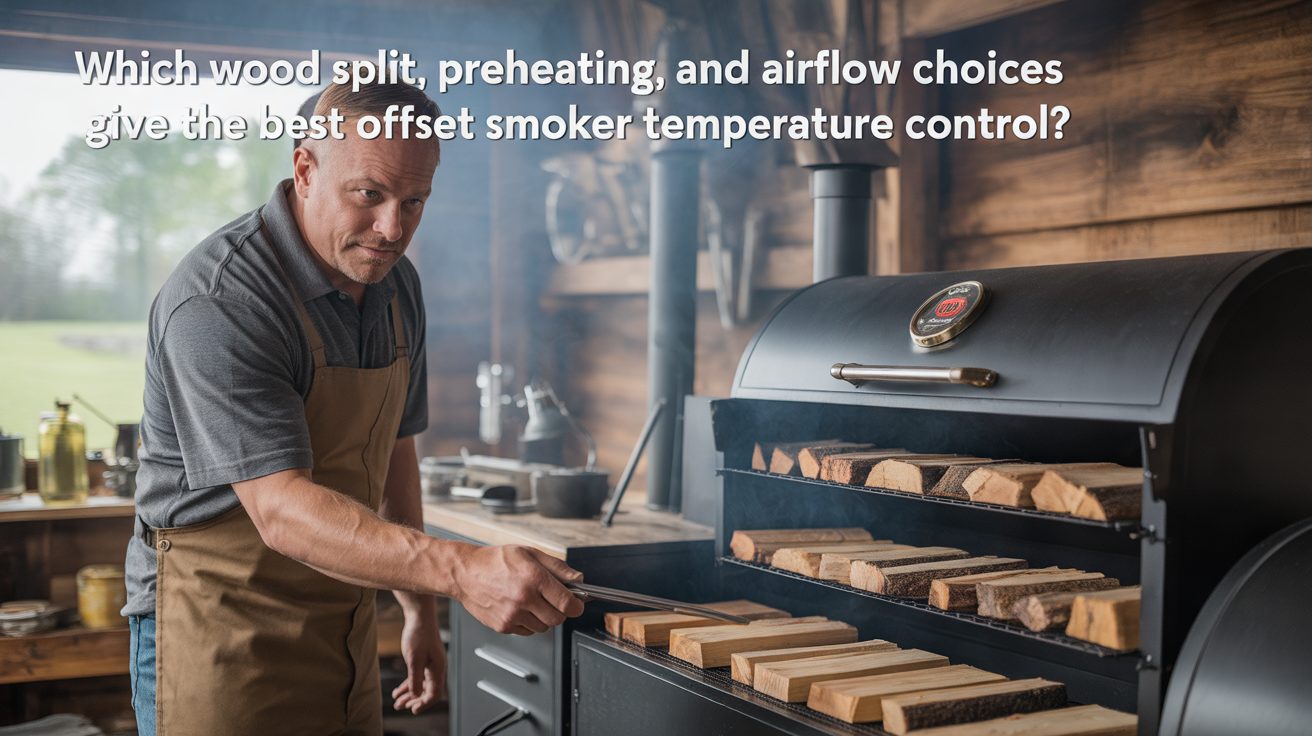
For 225°F cooking, select small-to-medium dry splits that ignite rapidly from the coal bed, preheat the next split on the firebox, and use airflow to support combustion rather than choke it. Split dimensions must suit the firebox: a split that is too large creates an oversized fuel charge, while one that is too small burns away before it contributes steady heat.
The useful split is the one that fits the existing fire cycle. Consistent split size makes the effect of each addition easier to anticipate and reduces the need for large vent corrections.
Preheating does not mean scorching wood until it ignites unattended. It means resting the next split on a safe, hot area of the firebox or warming rack so surface moisture is driven off and the wood enters the fire more readily. A preheated split reduces the cold-fuel dip that occurs when fresh wood absorbs heat from the coal bed before it begins burning.
| Fuel and airflow approach | Heat behavior at 225°F | Smoke quality | Best use | Main risk |
|---|---|---|---|---|
| Small preheated split over a mature coal bed | Gradual, manageable rise | Clean when burning with flame | Routine fire maintenance | Feeding too often and building excess heat |
| Large cold split | Large delayed rise followed by a spike | Often dirtier during ignition | Recovering from a genuinely weak fire | Bitter smoke and overshooting the target |
| Charcoal-heavy fire with occasional wood | Stable base heat with less flavor variation | Clean if charcoal is fully lit | Long cooks where predictability is the priority | Flat smoke profile or ash accumulation |
| Intake nearly closed, exhaust open | Can reduce heat only if the fire remains flaming | Can become dirty if starved of oxygen | Fine trimming after approaching target | Smoldering and unstable recovery |
| Exhaust restricted | Reduces flow but also weakens draft | Often stale and heavy | Rarely a first-choice control method | Creosote-like deposits and poor combustion |
Wood moisture and storage determine whether a split behaves predictably. Use clean, seasoned cooking wood that feels dry, is free of paint or treatment, and does not hiss excessively in the fire. Wet wood consumes fire energy evaporating water before it can combust efficiently. The result is a lower firebox temperature, delayed ignition, and visible white smoke.
A temperature controller with a fan can help maintain airflow, but it cannot fix wet wood, a clogged fire grate, leaks that bypass the intended air path, or a weak coal bed. The best offset smoker temperature control is still built on a sound fire. Automation is most useful as a stabilizer after the pit is already burning cleanly, not as a substitute for fire management.
How should offset smoker temperature control change in wind, cold, rain, and direct sun?
Weather response should begin with fuel planning and cooker positioning, because wind and ambient conditions change heat loss and draft before a vent adjustment can compensate. Wind blowing directly into an intake can force excess oxygen into the firebox, creating an unexpectedly hot, fast-burning fire. Wind striking the stack can disturb exhaust flow. Position the smoker in a safe, open location with a windbreak that does not trap smoke, block the stack, or create a fire hazard.
In other words, correct the condition affecting the cooker before making a large airflow adjustment. A protected, safely positioned smoker gives the intake and exhaust a more consistent job to do.
Cold air and rain increase heat loss from the cooker’s steel. Expect to burn fuel more frequently, but resist the urge to use giant splits. Maintain the same small, clean fuel cycle and add each split a little earlier. In strong cold-weather conditions, a properly fitted insulated cover designed for the cooker can reduce heat loss, but never cover the stack, intake, firebox, or other areas that must remain clear for safe combustion.
Direct sun can raise the apparent chamber temperature, especially on dark-painted cookers. Verify with grate-level probes before changing vents. A cooker at 225°F in the sun may not need less fuel; it may simply be reporting a different external heat load. Similarly, opening the cooking chamber to inspect meat releases a large amount of stored heat and disrupts draft. Plan spritzing, probing, and wrapping around useful cooking milestones rather than opening the lid on a schedule.
Water pans are a separate decision from fire control. A water pan adds thermal mass and humidity, which can soften short swings and reduce the drying effect of moving air near lean or unwrapped food. It also absorbs energy, so it may increase fuel demand and delay recovery after the lid opens. Put a pan in the cook chamber only if it can sit safely without blocking airflow or dripping into the firebox; do not expect it to repair an unstable fire.
For an outdoor cooking setup designed around real use conditions, see outdoor kitchen options in Queen Creek.
How do you diagnose offset smoker temperature swings without chasing the gauge?
Diagnose temperature swings by watching the fire, the trend line, and the timing of fuel additions rather than reacting to every single thermometer number. A narrow 10–15°F drift around 225°F is usually less consequential than a fire that repeatedly produces dirty smoke. Large, repeating swings reveal a specific cause.
The useful question is not whether the probe moved by a few degrees, but what changed in the fire shortly before the trend began. Matching the timing of a swing to a fuel addition, airflow change, or weather shift makes the next adjustment more deliberate.
Slow decline followed by a sharp spike: The coal bed was allowed to weaken, then a large split or too much charcoal was added to recover. Feed a smaller preheated split earlier next time.
Rapid rise immediately after a split: The fuel piece is too large, the intake is too open for the established fire, or wind is driving air into the firebox. Let the split burn cleanly, reduce intake slightly, and use a smaller split on the next cycle.
Temperature falls and smoke turns white after adding wood: The split is cold or damp, the coal bed is weak, or airflow is restricted. Open the intake temporarily if needed to establish flame; do not close the stack in an effort to hold heat.
One end of the cook chamber runs hotter: This is usually cooker geometry, not a fire failure. Rotate food if the recipe demands uniform exposure, use the cooler zone for delicate items, and avoid treating a local hot spot as evidence that the entire pit is too hot.
Gauge says 225°F but food cooks unevenly or slowly: Confirm probe accuracy in a known-temperature environment, place probes at grate level, and check whether a water pan, foil pan, or oversized meat cut is blocking the normal heat path.
Offset smokers reward repeatable notes. Record outside conditions, starter fuel amount, split size, intake position, time between additions, and grate temperatures. After several cooks, you will recognize the fuel cycle that your specific pit prefers. That working knowledge is more valuable than copying another cooker's vent setting.
For local barbecue conversations and practical cooking inspiration, visit BBQ in Queen Creek. Need help planning a dependable live-fire cooking setup or barbecue service? Contact Bigbsbbqs with your cooking or event needs.
Frequently asked questions
These answers address the most common fire-management, food-safety, and equipment questions about holding an offset smoker near 225°F.
How do I get my offset smoker hotter?
To get an offset smoker hotter, build a larger fully lit coal bed, add a dry preheated split, open the intake enough to establish a clean flame, and make sure ash is not blocking airflow beneath the fire. Do not restrict the exhaust to create heat; a restricted exhaust weakens draft and can create dirty smoke.
What is the 4-hour rule for smoking meat?
The 4-hour rule refers to limiting the total time perishable food spends in the 40–140°F range, where bacteria can multiply rapidly. Start with properly refrigerated meat, avoid prolonged warm holding before cooking, and do not rely on smoke or a low chamber temperature as a substitute for safe food handling.
Should I put a water pan in my offset smoker?
A water pan is optional in an offset smoker and is most useful when you want added humidity and thermal buffering in the cook chamber. It will not fix poor combustion, and it can increase fuel use because the fire must heat and maintain the water.
Is 350°F too hot for smoking?
350°F is too hot for a traditional low-and-slow 225°F cook, but it is a useful roasting or hot-smoking temperature for foods that benefit from crisp skin or faster rendering. At 350°F, use recipes designed for higher heat and monitor the food more closely because surface browning accelerates.
Why does my offset smoker produce thick white smoke?
Thick white smoke usually means the wood is smoldering because it is damp, cold, oversized, under-ignited, or short of oxygen. Use dry smaller splits, maintain a glowing coal bed, preheat the next split, and keep enough intake airflow for an active flame.
What is the best temperature controller for an offset smoker?
The best controller for an offset smoker is one that supports an already clean, stable fire without blocking normal draft or encouraging oversized fuel loads. A fan-assisted controller can reduce minor swings, but fuel quality, coal-bed depth, stack flow, and probe placement remain the deciding factors.
How is electric offset smoker temperature control different?
Electric offset smoker temperature control relies on an electric heating element and thermostat rather than a coal bed and live-fire draft, so it is usually more automatic but offers less direct combustion control. A wood-fired offset requires managing oxygen and fuel combustion; an electric model requires verifying probe accuracy, element cycling, door seals, and smoke-generator performance.
How often should I add wood to hold 225°F?
Add wood when the existing split has mostly burned down but the coal bed is still glowing strongly enough to ignite the next preheated split quickly. The interval depends on firebox size, split size, weather, and cooker construction, so use flame quality and the temperature trend rather than a fixed clock schedule.